 Nevada
Expired ID at the Notary: What You Can Do in Nevada
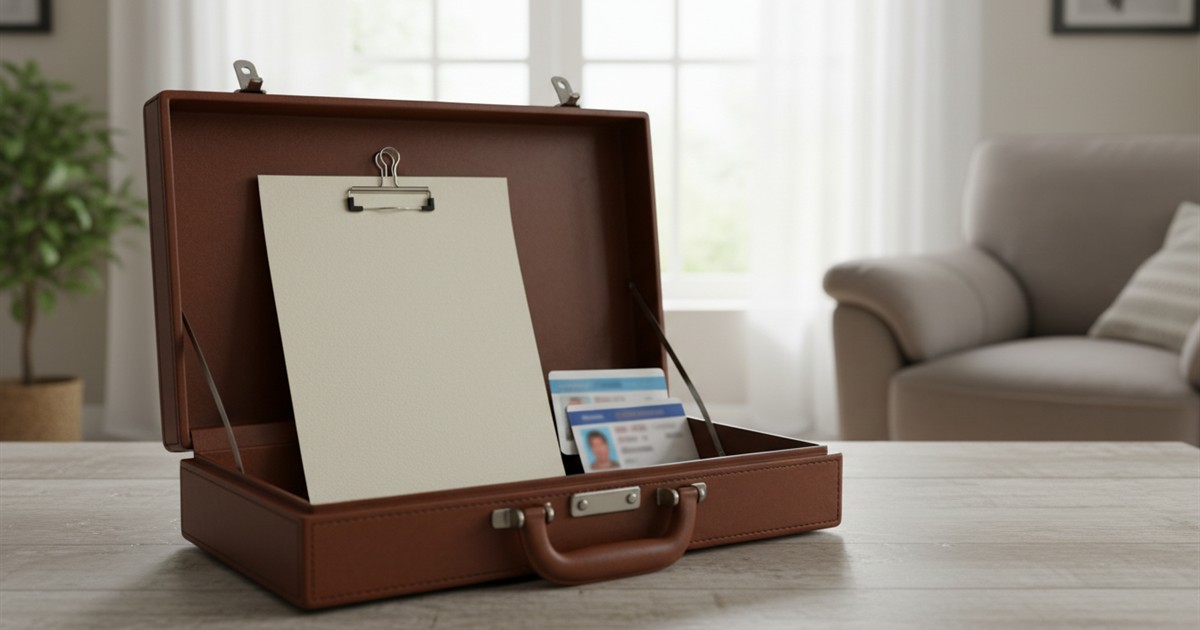
It is one of the most common ways a notary appointment falls apart: the signer arrives, the document is complete, the certificate is filled in, and then the driver license comes out of the wallet with a date that passed four months ago. The notary looks at it, hands it back, and the appointment ends there.
That is not the notary being difficult. Identification is the load-bearing part of a notarization, and Nevada sets the standard for what counts. This page walks through what happens when your ID is expired, what you can realistically do about it the same day, and how to spot the problem before you book.
Why the expiration date actually matters
A notarial act is built on one question: is the person signing this document who they claim to be, right now, in front of the notary? The journal entry, the certificate, and the notary's signature all rest on that answer. A state-issued photo ID is the evidence the notary is permitted to rely on, and an expired card is a card whose issuer has stopped vouching for it.
The rule does not bend for obvious cases. A signer whose face plainly matches the photo, a card that expired last week, a known family member — none of that changes the fact that the credential is no longer current. Notaries who accept expired identification put their commission at risk and weaken every certificate they have written that month.
You can read more about which documents qualify in our guide to Nevada notary ID requirements, which covers the full list and the less common forms.
What counts, and what does not
Nevada accepts current, unexpired, government-issued photo identification. In practice that means a driver license or state ID card, a U.S. passport or passport card, a military ID, or a permanent resident card. Foreign passports with the required documentation are sometimes usable, but it is worth confirming before the appointment rather than in the parking lot.
What does not work, regardless of how legitimate it looks: a photocopy, a photograph of the card on your phone, an expired card of any kind, a work badge, a student ID, or a document with no photo. Notaries see all of these, usually from people who assumed a picture of an ID would be enough.
One nuance people miss: the name on the ID has to match the name on the document closely enough for the notary to be satisfied. A maiden name on the license and a married name on the deed is a second conversation, and one that is much easier to have before the appointment.
The realistic options when your ID has expired
1. Bring a second credential
Most people have more than one form of identification without realizing it. A passport that is still valid, a passport card, a military ID, or a permanent resident card all work. If the expired card is a driver license, check the passport drawer before you cancel anything. This is the single fastest fix, and it resolves a surprising share of cases.
2. Renew before the appointment
If you have time, renew first. In the Las Vegas valley, a DMV appointment is same-week in most cases, and the temporary paper credential issued at the counter can be a workable option depending on how the notary and the receiving party treat it. Be ready to explain the situation when booking, because some institutions are pickier than others about a paper interim license.
3. Ask the signing party what they will accept
The notary's obligation is separate from whatever the bank, title company, or agency receiving the document requires. Some recipients will accept a notarization completed a day later with a renewed ID. Some will not. It is worth one phone call to find out whether the deadline is real, because a document notarized with an expired ID is notarized wrongly, and that problem does not fix itself later.
4. Reschedule, and say why
If none of the above is possible today, rescheduling is the honest answer. Call the notary and explain. A notary who knows the situation ahead of time can often tell you whether an alternative credential will work, or hold a slot for later in the week. What costs money is turning up without telling anyone, then paying a second travel fee for the same document.
The remote option, and a myth about it
Remote online notarization uses the same standard, but the mechanics differ. Instead of a plastic card, the signer usually goes through an identity proofing step that checks personal records and then verifies a government-issued credential live on camera. If your physical card is expired, that check will not rescue you — the platform is comparing against current records, and an expired document fails just as it would in person.
Where remote does help is convenience: a remote session is available anywhere in Nevada, so a signer in Reno, Elko, or Elko County does not have to find a local notary, and a household split between states can get a document signed without a drive. Mobile and walk-in visits, by contrast, cover the Greater Las Vegas area only, including Henderson and surrounding suburbs. There is more detail on the service area page.
How to avoid the problem entirely
Before booking anything, take the ID out of your wallet and read the expiration date. If it is within 60 days of expiring, plan around the renewal. If it has already expired, look for a passport before assuming the appointment is lost.
Also check the document itself before you leave home. A missing notarial certificate or a signature placed before the notary was present will stop an appointment just as reliably as bad ID. Our guide to what to bring to a notary appointment covers the rest.
Costs are straightforward and worth knowing in advance: an in-person or mobile visit is $15 for the first signature and $7.50 for each additional one, with a mobile travel fee of $30 per hour between 6am and 7pm and $50 per hour after hours, on a two-hour minimum. A remote session is $25 for the first signature and $10 for each additional. The pricing page compares all three.
Frequently asked, briefly
My ID expired a day ago. Will any notary take it? No — the expiration date is not a grace period.
Can a passport be used for a real estate document? Yes. It is government-issued photo identification, acceptable for the notarial act itself.
What if I have no photo ID at all? The document cannot be notarized today, and a certificate obtained anyway can be challenged later.
If you are unsure whether your identification will be accepted, sent along a photo of both sides of the card and the document before booking. It takes a minute and it saves a trip. Booking a slot through the contact page is the simplest way to confirm, and the FAQ answers the other common questions about what a notary can and cannot do.
More from the blog
- A Notary Copy Is Not a Certified Copy: Nevada Guide
- What Actually Happens During a Remote Notarization
- What to Bring to a Notary Appointment in Nevada
This article is general information about Nevada notarial practice, not legal advice. I am not an attorney licensed to practice law in Nevada and cannot give legal advice. For guidance about your specific situation, consult a licensed Nevada attorney.