 Nevada
Notarizing at a Cafe in Nevada: How to Pick a Good Public Spot
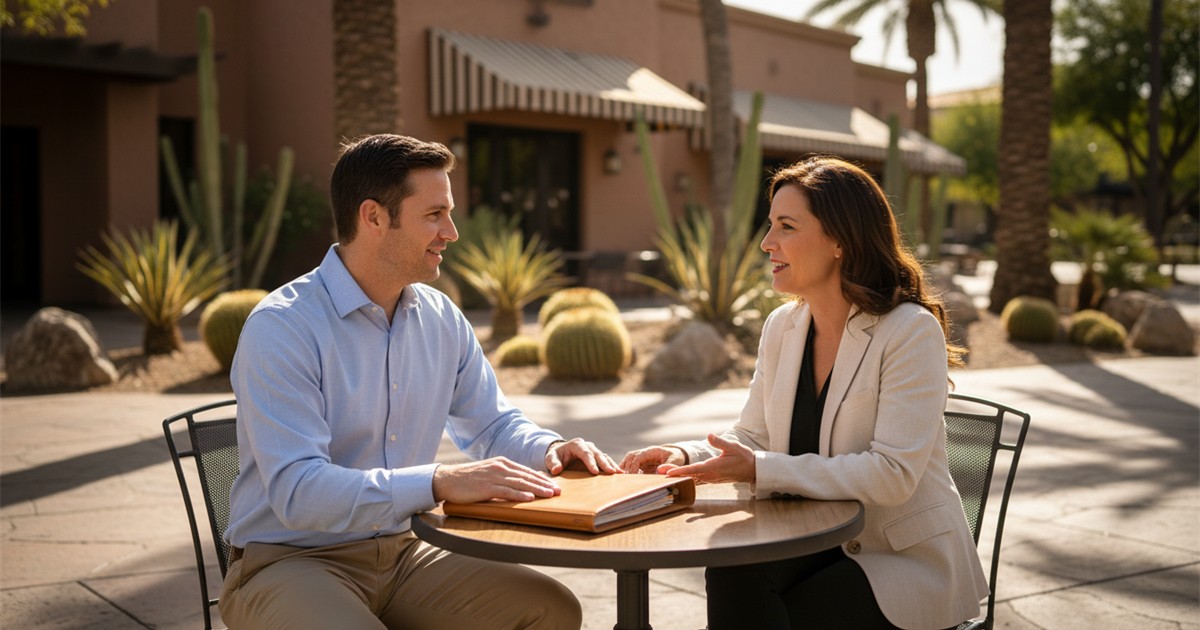
Not everyone wants a notary at the kitchen table, and not everyone can slip away to a walk-in counter on a weekday afternoon. Meeting halfway at a coffee shop solves a lot of scheduling problems at once: it is public, it is easy to find, and it usually has parking. It also works well for two people who need to sign together but live on opposite sides of the valley.
The visit itself is short. Most of the friction comes from the setting, not the paperwork, so a little planning turns a maybe-thirty-minute meeting into a ten-minute one.
Why a public place is a reasonable choice
A notary is confirming that you are who you say you are and that you are signing by choice. A busy, well-lit public room is actually helpful for that: there are witnesses around, nobody is being cornered, and the whole exchange happens in the open. The notary notes the location in the journal entry for the act, which is one reason a fixed, findable spot beats "meet me in the parking lot."
If you are already booking a mobile visit, the notary travels to you, and the location is up to you as long as it is in the service area. A cafe table is a legitimate meeting point for a short signing — no different in principle from an office conference room.
What makes a table work
Not every cafe is equally good. Four things matter more than the coffee:
Surface area
A notarized document set needs room to be laid out flat, turned around, and signed without stacking. A small two-top wedged against a wall is the wrong table. Look for a four-person table, preferably against a window or in a corner, where you will not be asked to move because a larger party arrived. Tray-style tables bolted to the floor are a hard no.
Light
The notary has to read the document and compare your face against a photo ID. Dim, moody lighting is a real obstacle. Daylight from a window beats overhead lamps, which in turn beat a candlelit back corner.
Noise
A notarial act involves a short conversation: the notary asks whether you signed freely, explains what is being notarized, and may need a witness to hear it. A cafe at peak brunch volume makes that unpleasant and slow. Aim for mid-morning or mid-afternoon, between the breakfast rush and the lunch crowd.
Privacy without isolation
You want to be able to talk and set documents down without an audience reading over your shoulder. A corner table or an outdoor spot with shade gives you that balance.
What to bring so it is one visit
The most common reason a cafe signing turns into a second trip is something left in the car or at home. Bring, at minimum:
- Your current government photo ID — driver license, state ID, or passport. Not a photocopy, not an expired card.
- The entire document, complete, including every page and any exhibits. A notary can only notarize the signature that is actually in front of them.
- All co-signers. If a document needs two signatures, both people should be at the table. A notary cannot notarize a signature made later by someone who was not there.
- Your own pen. Not required, but a signing pen you are comfortable with matters on documents with several signature lines.
- Any instructions from the recipient — a bank, a title company, an attorney, a school — about what form of notarization they want.
Leave the signature lines blank until you are in front of the notary. Signing early is the single most common reason a document has to be redone. Our guide to preparing a document for notarization covers the rest of that checklist.
A quick word on signing for other people
Cafe meetings often come up when a family member needs help with paperwork. It is worth saying plainly: the person whose signature is being notarized has to be present, show their own ID, and sign or acknowledge the signature themselves. A spouse, adult child, or caregiver cannot sign in their place, and a notary cannot look the other way when it happens. If someone is housebound, the correct answer is a mobile visit to them, not a proxy signature at a coffee shop. The rules on signing for someone else explain where that line sits.
What it costs, and what the travel fee means
The notarial fee itself is set by statute and does not change based on where you meet. In Nevada, in-person notarization is $15 for the first signature and $7.50 for each additional signature under the NRS 240.100 cap. A cafe meeting is a mobile visit if the notary is traveling to you, and mobile service adds a travel charge of $30 per hour from 6 a.m. to 7 p.m. or $50 per hour from 7 p.m. to 6 a.m., with a two-hour minimum and pro rata billing after that.
One practical consequence: two signatures at a coffee shop can cost more in travel than in notarial fees. If your document is small and your schedule is flexible, a walk-in appointment may be cheaper. If you have several documents, multiple signers, or no time to spare, the travel is usually worth it. The pricing page lays out both structures side by side.
Mobile and walk-in service covers the Greater Las Vegas area only — Las Vegas, Henderson, North Las Vegas, and nearby communities. If you are outside that area, remote online notarization is available anywhere in Nevada and runs $25 for the first signature and $10 for each additional signature, with no travel charge.
If the cafe falls through
Cafes get crowded, tables get taken, and occasionally a manager objects to paperwork at a table during a rush. Have a backup in mind: a library study room, a hotel lobby, or a community center lobby all work. If the crowd is the problem, ask whether the notary can meet you somewhere quieter nearby rather than trying to force it at a noisy table.
If you arrive and the document is missing a page, the notary cannot do much. Most re-visits are avoidable by reviewing the packet the night before and confirming the signature lines are still blank.
Setting it up
A good cafe signing is a small logistical problem: the right table, daylight, a quiet hour, a complete packet, and everyone present with valid ID. Get those five things right and the notarization takes a few minutes, with time left to actually drink the coffee.
When you book, tell us the document type, how many people will be signing, and roughly where in the valley you are. The contact page is the fastest way to do that, and the FAQ answers questions about timing, travel, and what happens if a signer's ID does not pass.
More from the blog
- The Bank Has a Notary: When That Helps and When It Does Not
- Who Keeps the Notarized Copy After the Appointment?
- When One Notarization Is Not Enough: Duplicate Copies
This article is general information about Nevada notarial practice, not legal advice. I am not an attorney licensed to practice law in Nevada and cannot give legal advice. For guidance about your specific situation, consult a licensed Nevada attorney.